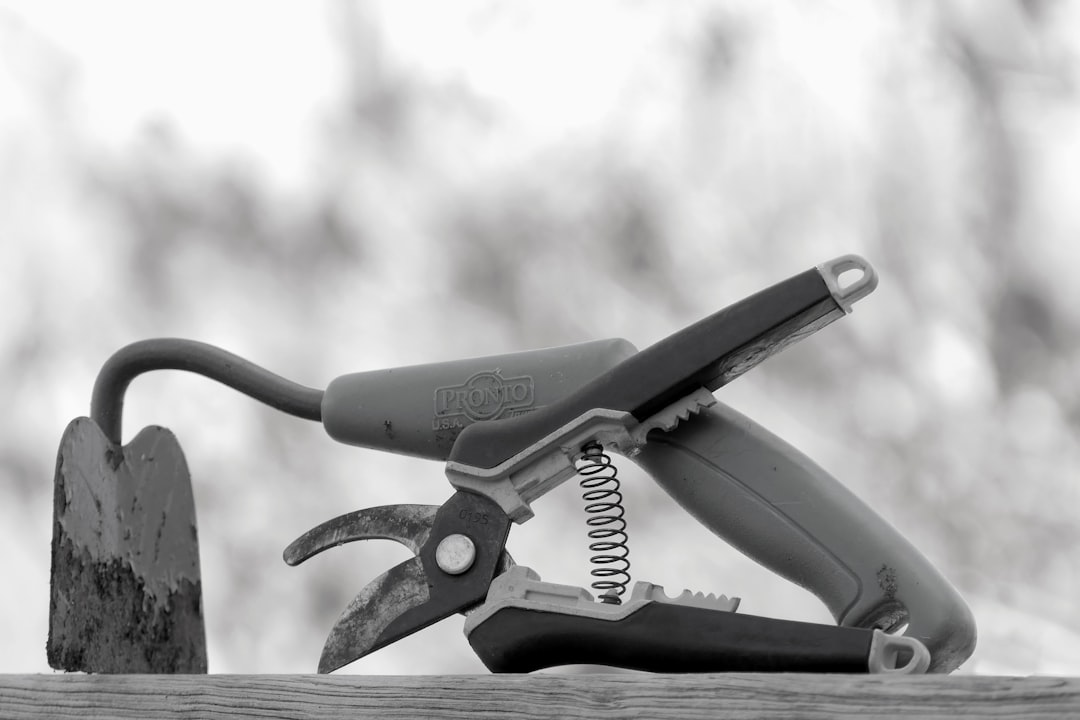
What's the difference between anvil and bypass secateurs?
The two names describe how the blades meet. Bypass secateurs have two curved blades that slide past each other like a pair of scissors: one blade is sharp, the other is a softer unsharpened hook that holds the stem in place. That scissor action slices cleanly through live growth. Anvil secateurs use a single sharp blade that comes straight down onto a flat metal block, the anvil. There's no second blade to pass, so the cut is more of a chop onto a surface.
That single difference decides almost everything else. Bypass gives a cleaner wound that helps plants heal, which is why it's the default for most pruning. Anvil gives more downward force, which is why it wins on dry, dead or brittle material. If you only remember one thing, remember this: bypass for living, anvil for dead.
Are anvil or bypass secateurs better for roses?
Bypass secateurs are the better pick for roses. Rose canes are live wood and you want a clean cut that doesn't tear the stem, because a ragged wound is where dieback and disease get in. A bypass blade slices the cane in one pass, which lowers that risk. Most rose pruning guides recommend a crisp diagonal cut just above a healthy bud, and a sharp bypass tool does that job best.
If you're cutting out genuinely dead wood on an old rose, an anvil pair can help because the dead cane won't flex away from the blade. But for the regular summer deadheading and shaping that roses need, keep a bypass pair handy. The Felco 2 Bypass Secateurs are a common reference point for clean rose work because the forged blades hold an edge through a long season.
Which is better for old, woody or dead growth?
Anvil secateurs handle old, woody and dead growth better. Dry wood doesn't flex, so a bypass hook can slip or crush it rather than cut. The anvil blade presses straight down with more force and meets a solid plate, which bites through brittle material without the stem dodging the cut. For clearing dead branches, removing spent flower heads that have turned woody, or tackling autumn clean-up, an anvil tool is the more forgiving choice.
For repeated thick dead wood, a lever-action model like the Felco 13 Secateurs adds mechanical advantage so you don't fight the blade. The trade-off is that anvil blades are harsher on anything alive, so use them for the dead stuff and switch to bypass for living growth. That two-tool approach is what most established allotment holders end up doing.
Do anvil secateurs crush stems?
On live green stems, yes, an anvil blade can pinch and bruise the tissue. Because it presses the stem onto a flat plate instead of slicing past a second blade, the plant material gets compressed at the cut line. That bruising slows healing and can let infection in. It's the main reason anvil types are best kept for dead wood rather than living growth.
If you've only got an anvil pair and need to trim something green, keep the blade sharp and make the cut in one confident motion. But for anything you want the plant to recover from quickly, bypass is the safer cut.
Are bypass secateurs better for live green growth?
Yes. The scissor action of a bypass tool slices rather than crushes, which leaves a clean wound on live stems, soft shoots and green wood. That clean cut matters for plant health because it closes over faster and resists disease. For the bulk of UK garden pruning, deadheading, soft fruit and shrub work, bypass is the tool that does the least damage and the most good.
Smaller hands or finer work benefit from a compact bypass model. The Felco 6 Compact Secateurs, the lightweight ARS HP-VS9Z Secateurs and the tiny ARS Mini Choki are all built around the same bypass principle in an easier-to-control body.
Which type should a beginner buy?
A bypass pair covers the widest range of everyday jobs, so most beginners are better starting with bypass and adding an anvil tool later if they find themselves fighting dead wood. Bypass handles deadheading, soft pruning, veg crops, cut flowers and most shrub work, which is the majority of what a new gardener actually does in a typical UK season.
You don't need to spend a fortune to start. A solid mid-range bypass pair will teach you the cut, and if you grow into the hobby the best budget secateurs roundup shows which cheaper models hold up. Move up to a forged model like the Felco 2 once you know you'll use it weekly.
Can you use bypass secateurs on thick branches?
Bypass secateurs handle stems up to roughly the blade's rated diameter, which on most consumer pairs is about 20 to 25 mm. Past that, the blades bind, the cut gets ragged and you risk twisting the tool. For anything thicker, step up to loppers or a pruning saw, which give you the force and tooth length that thick wood needs.
A good habit is to size the tool to the stem. Thin green growth gets the bypass secateurs, thumb-thick dead wood gets the anvil pair, and anything past a couple of centimetres gets the loppers. Match the tool and every cut stays clean.
Final Verdict
For most UK gardeners the answer is simple: buy a bypass pair first because it does the most jobs well, then add an anvil tool if you regularly clear dead or woody growth. Bypass gives the clean cut that live plants recover from fastest, and anvil gives the force that dead wood demands. If you want help narrowing the shortlist, the best secateurs UK roundup compares the leading models, and best secateurs for small hands covers compact options. For a deeper look at cut mechanics, the standard vs ratchet secateurs guide explains another variable worth knowing before you buy.